Tree Cabling And Bracing
by Admin
Posted on 06-11-2025 06:46 PM

What Is Tree Cabling and Bracing?
Tree cabling and bracing are proactive measures used by certified arborists to reinforce weak or compromised tree structures. While often used together, they serve different but complementary purposes.
Tree Cabling
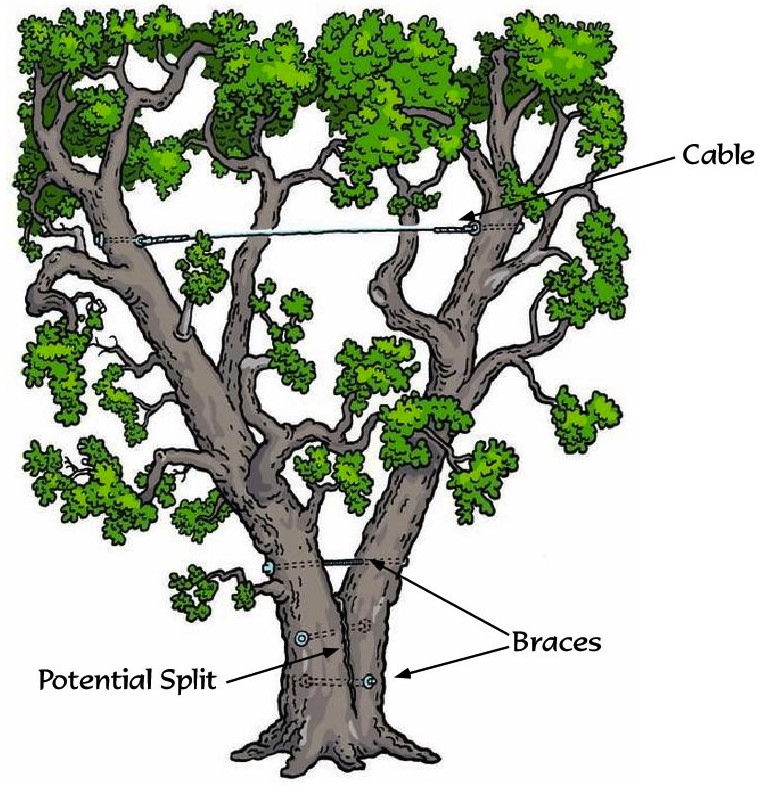
Cabling involves installing high-strength steel cables between major limbs or branches to reduce the risk of splitting or failure. These cables are typically installed in the upper third of the tree's crown, where the greatest leverage and stress occur during wind or snow events. The cables help redistribute weight and limit the movement of weak limbs, reducing strain on the branch unions.
The goal of cabling is not to immobilize the tree but to allow for natural movement while providing enough support to prevent catastrophic failure. Dynamic cabling systems, for example, allow some flexibility for growth and sway, mimicking natural motion while still offering protection.
Tree Bracing
Bracing, on the other hand, refers to the installation of rigid rods or bolts through weak branch unions or trunks to provide internal support. This method is particularly effective for trees with co-dominant stems (two main trunks growing side by side) or for repairing cracks that have already developed. Bracing rods are usually made of stainless steel or high-tensile threaded rods and are anchored deep into the wood on either side of a weak junction.
Unlike cabling, which works externally, bracing is an internal reinforcement that helps hold the tree together at its weakest points. When used in conjunction with cabling, bracing provides a comprehensive support system that can save a structurally compromised tree.
When Is Cabling and Bracing Necessary?
Not every tree needs cabling or bracing. These interventions are recommended only when a tree shows signs of structural weakness that could lead to failure. Some common indicators include:
It's important to note that cabling and bracing are not substitutes for proper tree care. They are supplementary techniques best used on healthy trees with good structural potential. Trees suffering from significant decay, root damage, or disease may not be good candidates, as the underlying health issues could render support systems ineffective.
How Are Cabling and Bracing Installed?
Installation of cabling and bracing systems should only be performed by certified arborists with experience in structural support. The process involves careful assessment, precise engineering, and adherence to industry standards such as those set by the International Society of Arboriculture (ISA).
Assessment and Planning
Before any hardware is installed, an arborist conducts a thorough evaluation of the tree's structure, health, and environment. This includes assessing the species, growth pattern, signs of decay, and potential failure points. The arborist then designs a support plan tailored to the tree's specific needs.
Installation Process
For cabling, the arborist selects anchor points high in the tree's canopy usually on strong, healthy limbs. Holes are drilled, and cables are attached using lag hooks, eye bolts, or other specialized hardware. The cable is tensioned appropriately to allow some movement while reducing stress.
For bracing, rods are inserted through the weakened union. Holes are drilled through both sides of the crack or junction, and threaded rods are inserted and secured with washers and nuts. In some cases, multiple rods may be needed for added strength.
All hardware used must be rated for long-term outdoor use and installed in a way that minimizes damage to the tree's vascular system. Improper installation can lead to decay, girdling, or accelerated failure making professional expertise essential.
Benefits of Tree Cabling and Bracing
When properly applied, cabling and bracing offer several important benefits:
Extending Tree Longevity
Many structurally weak trees are otherwise healthy and valuable to the landscape. Cabling and bracing can extend their life by decades, preserving their ecological and aesthetic benefits.
Preventing Property Damage and Injury
Falling branches or collapsing trees can cause serious harm to people and property. Support systems reduce the likelihood of failure, especially during storms or high winds, enhancing safety for homes, vehicles, and pedestrians.
Preserving Heritage and Specimen Trees
Large, mature trees often have historical or sentimental value. Cabling and bracing allow communities and homeowners to preserve these landmark trees without resorting to removal.
Cost-Effective Alternative to Removal
Removing a large tree is expensive and disruptive. In many cases, cabling and bracing offer a more economical and environmentally sound solution, especially when the tree has strong survival potential.
Limitations and Maintenance Requirements
While beneficial, cabling and bracing are not permanent fixes and come with important considerations.
Not a Cure-All
These systems address structural issues but do not correct underlying health problems like disease or decay. A tree with extensive rot may still fail, even with support. Therefore, ongoing tree health care—including pruning, fertilization, and pest management is essential. Professional https://rootededges.com/blog/tree-care/tree-maintenance-services can help ensure that both structural and health aspects of a tree are properly managed.
Regular Inspections Needed
Support systems degrade over time due to weather, corrosion, or tree growth. Cables can stretch, and hardware can loosen or fail. The ISA recommends that cabling and bracing systems be inspected every 1 to 3 years by a certified arborist.
Potential for Damage if Improperly Installed
DIY attempts or unprofessional installation can harm the tree. For example, cables that are too tight can restrict growth and lead to girdling, while improperly placed braces can interfere with nutrient flow or create new weak points.
Growth Considerations
As trees grow, their structure changes. What was once a stable support point may become compromised as limbs thicken or shift. Regular monitoring ensures that the system remains effective and safe.
When Removal May Be the Better Option
Despite the benefits of cabling and bracing, there are situations where tree removal is the safer and more responsible choice:
In such cases, removal followed by replanting with a more suitable species may be the best long-term solution for safety and landscape health.
FAQs
What is the lifespan of a tree cabling and bracing system?
Cabling and bracing systems can last 10 to 20 years or more, depending on materials, tree species, and environmental conditions. However, they require regular inspections and may need adjustments or replacement over time.
Can I install cabling and bracing myself?
No. These procedures require specialized knowledge, equipment, and an understanding of tree biology. Improper installation can damage the tree or create safety hazards. Always hire a certified arborist.
Does cabling hurt the tree?
When installed correctly, cabling causes minimal harm. Drilling small holes for hardware is a minor wound that the tree can compartmentalize. The benefits of preventing major structural failure far outweigh the risks of proper installation.
How much does tree cabling and bracing cost?
Costs vary based on tree size, location, and complexity of the system. On average, cabling starts around $200 to $500 per cable, with bracing adding additional costs. A professional assessment is necessary for an accurate quote.
Can cabling save a tree that's already split?
In some cases, yes. If the split is recent and the tree is otherwise healthy, bracing can stabilize the crack and allow the tree to heal around the hardware. However, success depends on the extent of damage and timely intervention.
Are there different types of cabling systems?
Yes. Static cabling uses steel cables for rigid support, ideal for mature trees. Dynamic cabling uses more flexible materials (like synthetic rope) to allow greater movement, often used in younger trees or for temporary support. The choice depends on the trees needs and the arborist's assessment.